Contact Us

text Chat

with our Customer Service team for site assistance.

Phone

+44 (0)8701 999 440

Online Form

Please use this form to send us a message.

Address

VisitShetland, Market Cross, Lerwick, Shetland, ZE1 0LU, UK

Welcome to Shetland

Fair Isle

Fair Isle - The Jewel In the Ocean

Famous for its birds, knitwear and historic shipwrecks, Fair Isle is a tiny jewel of an island, half-way between Orkney and Shetland, owned by the National Trust for Scotland. Just 5km long and 3km wide, the isle's impressive cliffs rise to almost 200 metres on the west coast.

The 70 or so islanders mostly live at the more fertile southern end. The hilly northern part is largely moorland. Fair Isle's oceanic climate brings stormy but fairly mild winters, while summer visitors can expect rapid changes in the weather: a day of sparkling sunshine and incredible visibility can easily be followed by thick fog next morning.

Island of birds ...

PuffinPuffin

For more than 55 years the internationally renowned Fair Isle Bird Observatory has done scientific research on bird migration and the seabird breeding colonies - which are also a major tourist attraction.

Many keen birdwatchers stay at the comfortable Observatory Lodge to see the spring and autumn bird migrations. Fair Isle can produce impressive numbers of common species and also eastern rarities such as Lanceolated Warbler, Pallas's Grasshopper Warbler and Pechora Pipit. Visitors can accompany the wardens on their early morning rounds of the ringing traps, and help with daily observations.

From April to August the cliffs are busy with the sound (and smell!) of thousands of Fulmars, Kittiwakes, Razorbills, Guillemots, Black Guillemots and Puffins, while skuas and terns fiercely defend their nests on the moorland. There's also a small colony of Gannets. Fair Isle is one of the best places to watch seabirds at close range, especially Puffins which will walk right up to you if you sit quietly.

Sea Mammals

Grey and Common Seals are seen year round, Harbour Porpoises mostly in summer. Whales and dolphins sometimes cruise close inshore but are more often seen from the ferry "Good Shepherd" on passage to and from Shetland. The crew regularly report White-beaked Dolphins, Atlantic White-sided Dolphins, Orcas and Minke Whales.

... island of flowers

Fair Isle is best known for birds but, thanks to traditional crofting methods, it also has over 250 species of flowering plants. In summer the wetlands are dotted with the bright yellow of Bog Asphodel and the deep purple of Early Marsh Orchids. From late May the cliffs are awash with the delicate blue of Spring Squill, which gives way in June to a bright pink carpet of Thrift. Rarer plants include Frog Orchid.

Prostrate Juniper - rare in Shetland - is abundant on the heather moorland, with alpine species like Least Willow and Alpine Bistort. Many more familiar plants thrive in the hay fields, cultivated 'rigs', grazing lands and along the roadsides.

'Fair Isle Knitwear' that's really Fair Isle

The term 'Fair Isle Knitting' is now used worldwide but this unique style developed on Fair Isle long ago, when local knitters discovered that fine yarns stranded into a double layer produce durable, warm, and lightweight garments.

For hundreds of years the demand for hand-knits kept Fair Isle women busy. Islanders traded with passing ships, bartering home-made textiles and fresh produce for goods they couldn't make themselves.

Today the only source of the genuine article in the world is still Fair Isle, where a small co-operative - Fair Isle Crafts - produces traditional and contemporary sweaters on hand-frame machines, quality-controlled and labelled with Fair Isle's own trade mark.

A stepping stone in history

Norse settlers named it Fridarey - the island of peace - but this stepping stone in the sea was also vital in times of strife, when the Earls of Orkney and viking warlords before them used it as a look-out post and for sending fire signals to and from Shetland. The sagas tell how Kari the Viking wintered here on his voyage to the Hebrides. Later it was visited by the monks who brought Christianity to the north.

Fair Isle wrecks

For thousands of years Fair Isle has been a useful landmark for shipping but in storms and fog its coastline is highly dangerous. Among 100 known shipwrecks are:

  • 1588: 300 soldiers and sailors from the Spanish Armada ship "El Gran Grifon" stranded on Fair Isle when their ship foundered in the geo (cove) of Stroms Heelor.
  • 1798: the "Blessed Endeavour", bound from Dunbar for Greenland, wrecked at Maversgeo and three crew drowned.
  • 1868: German emigrant ship "Lessing" drove ashore at Klavers Geo in a gale and thick fog. Islanders received bravery awards for rescuing all 465 passengers and crew.

Over the centuries the island changed hands many times, paying rent in butter, cloth and fish oil - usually to absentee landlords who rarely visited. Communications with the outside world were difficult and sporadic. Only in the late 20th century did the island acquire a safe summer harbour, at North Haven, and even today the mailboat has to be hauled out of the water from the reach of winter storms.

For hundreds of years the main export was dried salt fish. At Kirkigeo on the more exposed South Harbour you can see ancient "noosts" where men who rowed and sailed to the line fishing hauled up their distinctive Fair Isle boats, or yoals. The boat-shaped noosts remain in use today and traditional boats are still built in the isle.

5,000 years of human settlement

Fair Isle North LighthouseFair Isle North Lighthouse

Fair Isle has been more intensively studied by archaeologists than almost any area of its size in Scotland. They've found evidence that the isle may have been settled by Neolithic people up to 5,000 years ago. There are traces of oval-shaped stone houses, perhaps 3,000 years old, and lines of turf and stone walls, or dykes, which snake across the landscape. The "Feely Dyke", a massive turf rampart which divides the common grazings from the crofts, may also be prehistoric.

The archaeological remains include curious "burnt mounds" - piles of blackened stones which appear to have been heated in a fire and then dropped in stone troughs to warm water. The purpose is unknown but may have been cooking, tanning, preparing cloth or even a primitive sauna.

There are two known Iron Age sites - a promontory fort at Landberg and the foundations of a house underlying an early Christian settlement at Kirkigeo.

Most of the place-names date from after the ninth-century Norse settlement of the Northern Isles. By that time the croft lands had clearly been in use for many centuries.

In all, Fair Isle has 14 scheduled monuments, ranging from the earliest signs of human activity to the remains of a World War II radar station. The two fine lighthouses, now automated, are also listed buildings.

Work and the land

Spinning Wheel, made in Fair IsleSpinning Wheel, made in Fair Isle

Long ago, the cultivable land and the better grazing were divided into small crofts. Crofting gives each household a stake in the island and its future. It's a lifestyle based on low-intensity, subsistence farming. The combination of modern technology and old-style labour produces hay, silage, oats, kale and turnips as winter fodder for sheep and cattle. Although Fair Isle's so far north, islanders can grow a lot of their own food outside - potatoes and a wide range of vegetables.

Many islanders combine several part-time jobs with their croft work. The ferry, school and other public service jobs are important but income also comes from the knitwear co-op, wildlife tourism, a local building firm and the shop and post office.

The island's historic role as a signal station continues today with its relay stations carrying TV, radio, telephone and military signals between Shetland, Orkney and the Scottish mainland.

Leading with wind power

Fair Isle South LighthouseFair Isle South Lighthouse

Being far from the National Grid, Fair Isle must make its own electricity and does so by the power of the wind - which is usually in good supply!

The first 60kw wind turbine went up in 1982 as a community effort, supported by council and government development agencies. As the first commercially-operated wind energy scheme in Europe, it proved an extremely successful alternative to expensive diesel-powered generators.

The Fair Isle Electricity Committee wisely set charges high enough to build up a reserve fund which in 1996 helped pay for a second, 100kw turbine, aided by the National Trust for Scotland, Shetland Islands Council, Shetland Enterprise and the European Union. The old machine was rebuilt and upgraded.

George Waterston Memorial Centre and Museum

George Waterston OBE (1911-1980), the former Scottish Director of the Royal Society for the Protection of Birds, was a much-loved figure who had a massive and positive influence on Fair Isle. He bought the island after World War II and co-founded the Bird Observatory in 1948, giving the isle's economy a much-needed boost. In 1955 the National Trust for Scotland succeeded him as landlord and helped islanders to stem emigration and revitalise the community.

Dr Waterston's memorial is a museum in the former Fair Isle School, packed with displays of the island's history from prehistoric times to the present. A guided tour is available on request, or you're welcome to browse this collection of photographs, documents and artefacts - for a unique insight into Fair Isle's past and a better understanding of its present.

Your journey to Fair Isle

Travel to Fair Isle is by ferry or 8-seater Direct Flight plane.

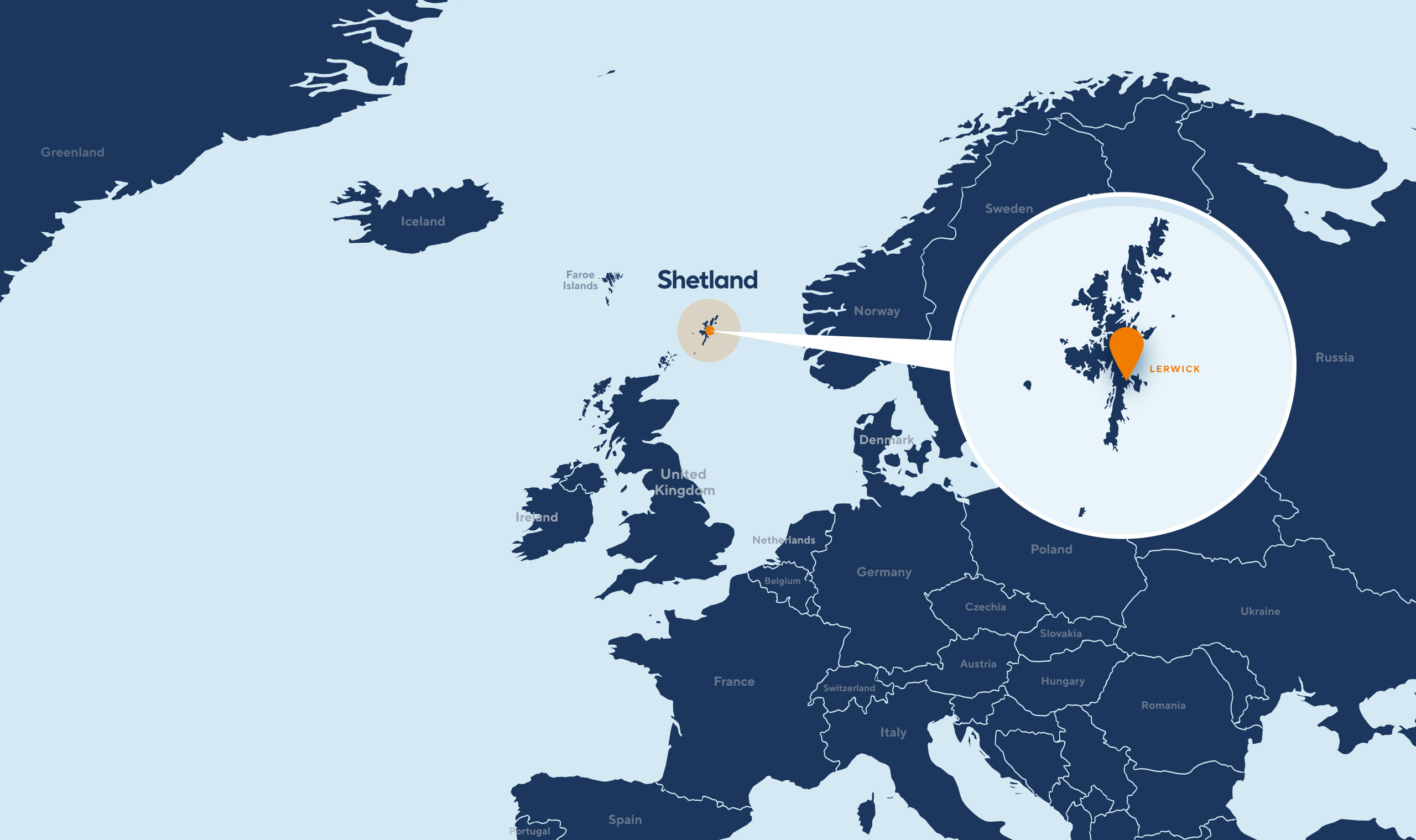
The ferry "Good Shepherd IV" carries 12 passengers and leaves from Grutness Pier at the southern tip of Shetland. The trip takes about 21/2 hours. In summer the ferry sails three times a week, with a fortnightly sailing from Lerwick.

The plane leaves from Tingwall Airport, just outside Lerwick, and takes about 25 minutes to reach Fair Isle.

For more information and bookings:

  • Good Shepherd IV ferry, telephone (01595) 760 222.
  • Direct Flight 'Islander' plane, telephone (01595) 840 246.

Please follow the Countryside Code

You're free to walk almost anywhere on the island, although some crofters prefer you not to cross their land at lambing time (April-May). Please follow the Countryside Code, close gates and use the stiles.

Fair Isle's cliffs offer dramatic scenery and seabird watching but they are also very dangerous. Please take care - and tell someone where you're going, and when you plan to be back.

More information:
View our interpretive leaflet on Fair Isle

Advertising Feature

2008 Wildlife Holidays In Shetland

2008 Wildlife Holidays In Shetland

Shetland offers the best wildlife-watching in Scotland - FACT.

Over a million breeding seabirds, the highest density of Otters in Europe, regular sightings of Killer Whales and superb displays of rare sub-arctic flora. Our award-winning holidays offer everything from fully guided wildlife weeks and long weekends, dedicated birdwatching holidays plus photographic, walking and insight holidays.

Visit our extensive website www.shetlandwildlife.co.uk or call Shetland Wildlife on 01950 422483 for a choice of over 30 holidays!

Feature

Swan Trips 2008

Swan Trips 2008

Enjoy a trip on the Swan this summer and experience the world of a resilient vessel restored to glory. Join a crew who love the sea, and be part of a learning experience!

Find out more

Sunday Times article

Feature

Focus on Wildlife - Spring 2008

Focus on Wildlife - Spring 2008

Fair Isle is famous in spring for its huge seabird colonies and rare migrants. Shetland birder Hugh Harrop is your expert guide on the ‘Mecca’ of British birding…

Read more

Feature

White Nights

White Nights

'White Nights', Ann Cleeves' sequel to her award-winning 'Raven Black', has now been published.  Don't miss a reading and signing from Ann in the Lerwick tourist office, Market Cross at 11.30am on Saturday 17th May.

Feature

21st Century Shetland Travelogue

21st Century Shetland Travelogue

'Between Weathers', the new Shetland Travelogue will be launched in Lerwick on 6th June 2008... 


Read more

News

The Centre for Nordic Studies

A new campus is to be set up in Lerwick for the new interdisciplinary Centre for Nordic Studies

More Info (pdf)

News

Shetland's First Ever Festival of Nature

Shetland's First Ever Festival of Nature

Organisers of Shetland’s first ever Festival of Nature, to be piloted from 4th to 12th July 2008, are calling on local businesses...

Read full Press Release (pdf)

More information

News

Shetland Museum shortlisted for The Art Fund Prize

The Shetland Museum and Archives on short list for The Art Fund Prize for museums and galleries 2008...


Read more

View all news stories